Readers Asked.

Instead of doing my usual blog post this week, I thought I’d change things up by answering some reader questions that have come through Melanoma Iowa (Facebook), Sarcoma Iowa (Facebook), @MelanomaIowa@SarcomaIowa and my LinkedIn page. A new page will be added to my blog called “Readers Asked” that will include your questions and my answers. Here’s the first of many more “Readers Asked” blog posts.

Readers Asked:

How did you become interested in treating cancers, specifically melanoma and sarcoma? Why the focus on these two cancers?

I decided to be a doctor at the age of 12. It was a personal experience for me that started after I had gotten stitches from falling down. During my medical schooling I was inspired by hematology the study of blood disorders and became fascinated with the cellular make up of this viscous substance. My curiosity of blood drove me to a career in cancer. During my 3-years of lab work I was asked to do sarcoma as it was the clinic that people feared. It opened my eyes to a whole new world that I found mirrored what I was seeing in the laboratory. Blood and sarcomas came from the same stem cell: mesenchymal stem cells. I would say sarcoma became more attractive as it encompassed such a variety of different types (150+ subtypes).

Why melanoma? The science behind it is riveting, it is smart and relentless; it grew on me and has made me very motivated to “figure it out”.

How do you have the energy to keep up with the emotions and science that an oncologist has to endure?

I think I am very passionate about what I see in cancer and its abilities scientifically. It’s the first cell to cheat death. The science is maddening and absolutely beautiful. My patients make me “bounce” and because of that I have grown more compassionate and it helps me endure.

Have you ever wanted to give up your job and find a more peaceful life without the stress of being a doctor that deals with cancer and all of the terrible outcomes that come with it?

Absolutely. Many times. My wife would say I am “attention-seeking” when I tell her I wish I was a garbage man, I really do. It’s a noble job that helps humanity clean up its mess but a shower fixes everything at the end of the day and I do not carry so much in my heart. What has transpired is I have discovered that because of what I know now I have a responsibility to help those around me, it is hard for me to turn my back on all the knowledge I have acquired and my ability to deliver excellent care.

How do you find work-life balance? What’s a day in your life?

Ah yes, this one perhaps I will blog about – thanks for asking this. Not easy. I do thank my wife for being ground zero to come home to. It’s why perhaps I married a psychiatrist. 

Can you give any ideas or suggestions on how the families of those with Melanoma can help support and say the right things to their loved ones fighting this disease?

I have learned that the best ideas come from you. Those in the battle, if only doctors would take the time to listen to their patients’ struggles. You are in the best position to offer the advice for other families who can learn from what your own experience has taught you. I often connect patients together to let them talk to each other. I really do not know what chemotherapy feels like or what a side-effect is. I counsel then connect. Tell me of your experience; it likely was the right one for the person you helped in their battle against this disease.

Do you have something you want to ask me? Email my assistant at julianna-kennedy@uiowa.edu with your question and I’ll add it to my next “Readers Asked” blog post.
Orphaned.

Everyone in the room is quiet.  I feel like the old man leaning forward looking through my glasses understanding the situation but not fully. As an observer  I have seen it, can describe it but I am not experiencing it myself. No one in the room can appreciate that struggle. Three situations have made me think differently this week about cancer and what I do.  So lets navigate the spheres of care. The psychological, the spiritual, and the physical realms that humans use to perceive their surroundings.

I walk into a room and pull up a chair. I feel separated from my patient because of a new unfortunate event. I start to talk. The power of words, trying to reconnect and asking politely to let me back into their struggle. My patient said to me “Mo I can handle the pain but not the emotions of this struggle”. I acknowledge this. I do not underestimate it. Anxiety and depression makes a patient alone as if  orphaned by their diagnosis struggling at their core to make sense of things. The psychological scramble.

My patient sits across from me, my last one for the day I think to myself, going home soon, the day is done. Then out of the blue as I describe the cancer, I hear the words “Mo you talk about cancer very  spiritually.” Revelation. Taboo, should not talk to this person about this right now, no religion allowed. That’s the training. My indoctrination. But honest that was one of the best conversations I have ever had with someone with this disease.

Challenged. My patient stares at me but does not understand. Waves at me and smiles. That innocent oblivious smile. Someone else is making this decision for them. They are in pain and the people around perceive the situation but are unable to communicate it truly and fully. How can this paradox exist you might think? In a challenged intellect perhaps where explaining the physical does not help, words are of no use and an orphan appears.

Three unique situations. Each one with no real guidance on how to approach them. Am I the pioneer then? Don’t want to be. But clearly we have to start thinking of this disease as different and evolve more holistic approaches to help those who it encompasses.  Perhaps we have to explore it in places we dared not go before. Like orphans exploring parenthood for the first time.

Mo

Firecrackers.

Firecrackers. I am talking about the small ones, that make the loudest noise. You know the ones, you light the fuse and then “BAM”. They are loud. Startling in fact. Pleasing. Frightening. As a child I use to love to startle people. I do the same now but I call it illumination. It is possibly how I teach those all around me. So as your read this make sure you imagine little sparkles of exploding energy with shrieks and cries of those who are startled.

Raw is the emotion of a patient with cancer. Most dive into sadness. But some into rage. Exploding with questions and a need for answers. A demand for the whys? You can almost hear them. Listen……..

When I counsel a patient I draw from my own experience. If a fiery 19 year old comes in to talk to me, I engage in the most rigorous discussions. I can feel the 19 year old in me raging against the diagnosis, battling to be free and I feed into that. I look at the person in front of me and I say in my heart- don’t change. You are so beautiful, and thank you for sharing it as it is. I think they just do not want to accept the reality around them. They want to fight.  And they want me to erupt against this beast that is attacking them.

Do we not all do this in seeking our independence and freedom from many things around us? Is the usual passage of human beings to be accepting and tolerant of their surroundings? I envy those who stand and say “no, this is not happening to me”. I look back at my life and say, I’m glad I said no to this or that. When I walk I snap my fingers pretty loudly because it helps me think. I find comfort in this sound because it reminds me to forgive anything my patients says to me when they are angry. Perhaps in some way I am forgiving my rebellious self.

So when you hear me in the halls snapping away, know that I carry in me all the firecrackers that said no to cancer. Like pins and needles they illuminate the way. Poke away my friends.

Mo

Midwest Sarcoma Trials Partnership

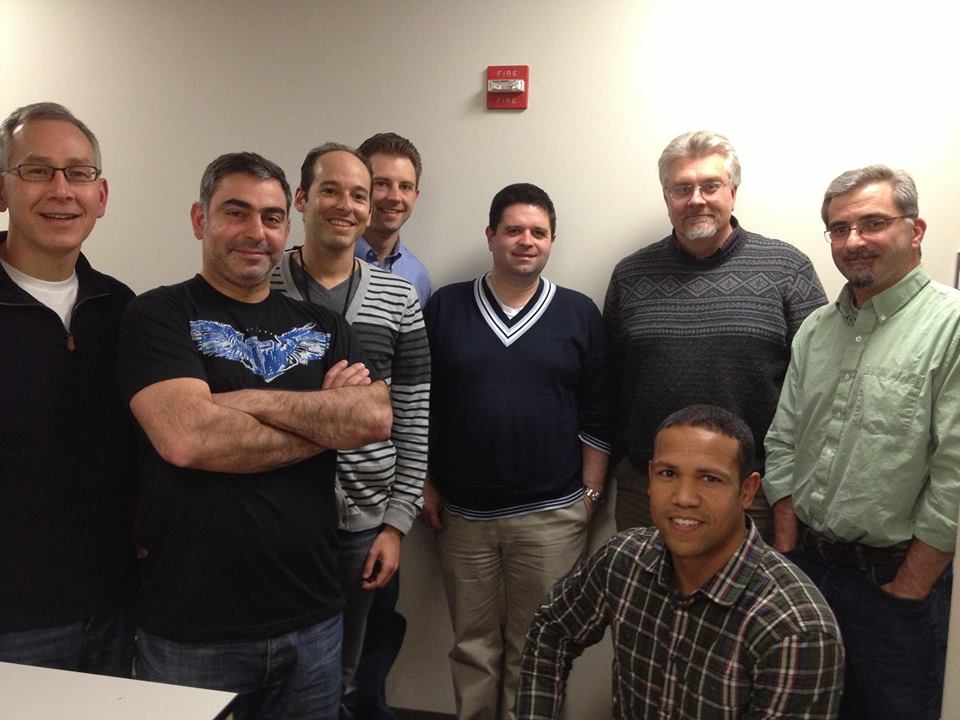
Thanks to all of the firecrackers that exist. This group (above) came together in March of 2013 and became the Midwest Sarcoma Trials Partnership (MSTP).

MSTP
MSTP

How?

“You got me this far” he told me. And then making it more difficult “I trust you” he added. Perhaps these should be easy words to hear and I should be proud that I was able to do something and be commended. But it’s the other words that linger “I trust you” he repeated. As I build my relationship with patients I become part of their successes, goals and their life. I am someone that they know, have shared their hardships and deepest thoughts. I am told that it is best to have barriers and not to get involved with them. I am told that I should find ways to separate me from them.

How?

To me this responsibility, this trust is crushing. It generally sends me reeling trying to make sense of the inevitability. Perhaps now I understand the spouse and her tears. How do I comfort? With my knowledge that has failed? With my compassion that I disguise?

But it does not end there; there is a question that I have loathed. “How long do I have?”

Is there a stamp with an expiry date? Perhaps I missed it in my examinations. That is what I say out loud, angrily perhaps? Do you say you did not climb Everest when you got only half way? When you stood at the bottom of the mountain and your first words were “I cannot do this?” Now that you are half way, what should I say about the journey so far? What about the goals we reached the times we shared? Just because I could not get you to the top what should I do? That is why my patients are amazing. It’s the first statement “you got me this far” that makes me heal.

It reverberates deeply in my mind. What strikes me down to my core beyond words that I feel do not understand.

How do I say goodbye?

Mo

Cage.

It’s about a mile walk from my clinic to my office. A small part of that walk is outside. Grey was the sky, a cold wind penetrated my shirt but not enough for a jacket I thought. A light drizzle of rain. I guess this is the “Ambience” of this blog. I sighed deeply as I walked, the conversation of the day speaking inside me. I could feel each step, each bone in my body ached. And I walked distracted.

“I am sorry but your insurance will not accept me treating you on this clinical trial.”

Shell Shocked.

I did not go into medicine to be forbidden to treat someone with what I felt would be the best option for them. I imagined myself a rare bird stuck in a cage realizing the boundaries of the system that I existed in.  My wings unable to soar. My perceived freedom now defined by outward forces beyond my control. I felt the bars close in and force my decisions. A slave to the system that I have now discovered is not  easy to navigate. “This is all I have to treat you with”.  I did not even want to be in the room anymore as I spoke to this human. Where did my compassion go?  I longed for the freedom to decide the best treatment. I wanted to soar and my anger rattled me.  I flew into the bars wanting them to bend. I felt the imposition of the system. Where are the tools to help my patient today?  This is coming from someone who does not take “no” lightly.

I walked to my office, and talked to my boss. An incredible man to say the least. He let me talk. Like a cushion he absorbed this shock. This is not the first time that this has happened.

I have always liked the political cartoons of the past. They speak volumes in pictures. Intelligently portraying the issues of the time. I sat and read some of the “Far Side” cartoons on my couch. Humor a mature psychological defense mechanism like an old teacher showing the way.

Here is my picture for you- “Imagine”:

That despite this cage; this bird today sang.

I still found a way to deliver my care.

Mo