Ambiguity

“You have to go home, you have a blog to write” my breathless patient uttered the words as he awkwardly ended our conversation last night. I was tired, but not nearly as much as he was. Yet he was there, caring about what I still had to do tonight. It had been a long day for him, a long week to be honest and now has been admitted. Patients get admitted for different reasons. Some to get chemotherapy, others with symptoms that are hard to manage at home.

It takes me one look at them to know that they need to be admitted to the hospital and that this is another battle they must face. Putting them in the hospital allows many aspects of their care to take place. They are right at the heart of the “factory”, with all the nurses, the physicians, the pharmacists, the medication, the machines and technology. He looked back at me and he knew that I would admit him. It was clear he was struggling and it was time to offer relief to him and his wife who cried but agreed this would be the best thing to do.

What will happen? Is it the cancer? They and I hoped for many other things and many outcomes, something I could possibly remedy. It’s not easy to see my patients struggling with their symptoms. They are trying hard to “fight”. They get stoic and a little stubborn. I promised to see him the next day to talk over the tests that I had asked the team taking care of him to do.  The ambiguity of not knowing his outcome was a thought that floated in my mind as I went home. I am ending my night praying for a result of a vision of him feeling better.

I walked away from the hospital, leaving my patient behind, but in the good careful hands of the staff in the hospital. I think of his words, “you have a blog to write” and I smile. Sure, I will work on my blog. He was one of my friends that read what I write every week.  It touched me that he read it, anticipated it and knew that I did that on Tuesday at the end of my day. I never know what I will write about, I just do. I let my day and mind settle. Tonight, like many nights, my thoughts are with those who are in the hospital. They linger with those that have ambiguity in what their outcome might be. It is a difficult place to be. Please know I am with you.

Goodnight my friends.

Mo


7 Days of Jim

It was my first day to meet Jim. He walked in and sat down, a well-appearing middle-aged man. I introduced myself and said I was just going to look at his scan and I would be back to discuss what I saw. In the back room, where patients sometimes wonder what we do I examined his CT-scan. His tumor had wrapped itself around his windpipes. I made a few calls and then walked back into the room and sat in front of Jim. He barely knew me. I had a solemn stare as I walked him through the scan and my fears that this might occlude his breathing pipe soon. I explained in detail that I would like a specialist to perform a procedure to look down his pipe to see if they could give me a better assessment. I also shared that they could do this today. With a trusting tone he agreed to have the procedure done on the same day. Until today I wonder why?

To do this procedure, he had to be placed on a ventilator –a breathing machine. I got a strange call from my specialist. “The procedure went well”, but he explained to me that they could “not remove Jim from the breathing tube”. They were worried if they did this that his lung may collapse, and he was being admitted to the intensive care unit (ICU) on a ventilator. I confess this is not the outcome I wanted. This patient came in walking and now was on a breathing machine in the ICU. I finished my clinic and made my way up to the unit to see how he was doing and to think up a plan. This is when I was met with all his family. “Get out of this one” my mind said. It was surreal. Many eyes were staring, asking me questions, wondering who I was and trying to understand why their loved one got instantly sicker after he had met with a doctor for the first time in the clinic.

I was going nowhere; I pulled up a chair, and sat down. I talked to Jim’s family, honestly and with great care and empathy I chose my words. Jim stayed in the ICU for 7 days. During these 7 days, I watched his family’s emotions, their courage, their faith, and their gratitude. As he lay there sedated and intubated, his family made difficult choices for him. Through this tumultuous period we bonded. With their help the tumor shrank with the treatment I had thought would be best. When Jim woke up, he could not remember any of it. His voice was hoarse, he did not know me, did not recall a thing that he went through, could not understand the days that had gone. It was ironic how the diagnosis, the ICU, the procedure and the waiting was an affair of his family and not him.

I have seen many things in my life, but the miracle of a family is something I appreciated that day.  I believe the days that Jim could not remember were long and memorable by those who are alive today. To Jim it was a mirage that we could only tell him about never felt or seen, for the family and I it was how we got to know each other.

Mo


Do You Read Cancer?

My patient sat across from me and said “You are the expert.” My mind began a long walk on a desert land, nothing as far as the eye could see. I reached a tree and sat down for a little to rest. Then stood up and continued walking. A nomad with a keen eye in the desert searching for water and life, finding answers as he continues his journey. I wonder how much my patients actually think I know about cancer. The way I see it, it’s the time I sat in the tree to rest, where the knowledge I have helps them navigate difficult choices. Science is the compass I hold, like the North Star shedding light giving direction to where I go next, this decision I make under the tree.

Here he was faced with his cancer returning it was his second visit and it was a short interval between the time I had told him and his return to see me. I gave him time since I broke the news in such a short time. My style is to stagger the information and give patients some time to receive the news, absorb the facts, grieve their health, rest, pick themselves up, and come back to fight. This is where I sit in the shade of the tree and conjure up a plan focused on where I am going to head out next. My thoughts questioned, “I am the expert?” But the desert is vast.

Science helps me read cancer. How do you explain that to the mind that eagerly awaits your decision to help them? So I tried, I asked him to imagine an alien land where you met the natives and you could not speak the language and you are trying to make sense of what they are saying to you. He looked at me and said “you understand this more than I do”. I did have a plan for how to treat him; I always have something I can offer to patients who pick themselves up. Some patients interpret this as me giving them hope. I, on the other hand, see this as their success in how they refused to fail. Like the nomad who looks up at the stars and knows where he will go next, I use what I know to guide them across the dangers of the terrain that they are being forced to navigate.

Fear is very real to patients. I saw that today in his eyes. What’s next? What’s up your sleeve Mo? I take refuge in the shade of the tree that will offer a moment to contemplate. The uncertainty of it all, yet the nomad finds his way to an oasis almost every time. Armed with his knowledge of the stars and the understanding of the hazards of the desert, using his patience, his wisdom and his passion he leaves the shade of the tree, pushing forward on his journey to find that which will quench his thirst. A powerful drive coupled to an amazing will of a patient who stands up when the cancer thinks it has succeeded.

Mo

Tad

He was very young and it had recurred in his brain. Tad was playing on his computer when I walked into the room. He looked healthy, his eyes bright and beaming with intelligence. I sat across from him in the old cancer center and he asked me question after question. I connected with him instantly and we talked. He always came alone, never accompanied by anyone. I respected his independence. He looked things up on the internet brought them to my attention. My melanoma program was young then and new therapies were still not available. It was hard to tell him about death, to share with him the lack of treatments available and to tell about how clinical trials work. He took it all in and shared with me that he would like to try something. He participated in a trial only offered here in Iowa. He became an instant hero. I shared with him the limitations of research, the problems we faced and how science alone is the best way to fight cancers that have no good treatments.  We discussed many thoughts and theories and he engaged with me as he went through his treatments. His tumors grew despite the treatment in his brain. I look back at the day I told him the news and he was wheeled off to surgery to have the tumors removed.

It had been 2 years without a word. I knew he was out there. He had not come back to see me nor visited. I thought about him a lot and what he was up to. I heard small snippets of his life. Tad did not want to get any more treatment and was living it up. I missed him and thought about his bravery and how his disease was just an obstacle that had crippled his life. I formed my own convictions about what and how he was living. Suddenly out of nowhere he came to see me. He was not the same, he lay there. He was crippled with his disease, his speech slurred, and he had a hard time articulating his words. I walked into the room, dazed that this man had made the journey after such a long time of silence to say goodbye. I sat down next to him, held his hand and began to cry. It is a rare moment for me to cry with my patients. He wanted me to know that he was content with everything, that he was comfortable and had lived his life fully. I was stunned at his outgoing attitude despite all the difficulties this disease had placed in front of him. He told me its ok, and he just wanted to say goodbye. I cannot find the words to express to you how that made me feel and I write this blog with words that cannot describe my sentiment around him that day.

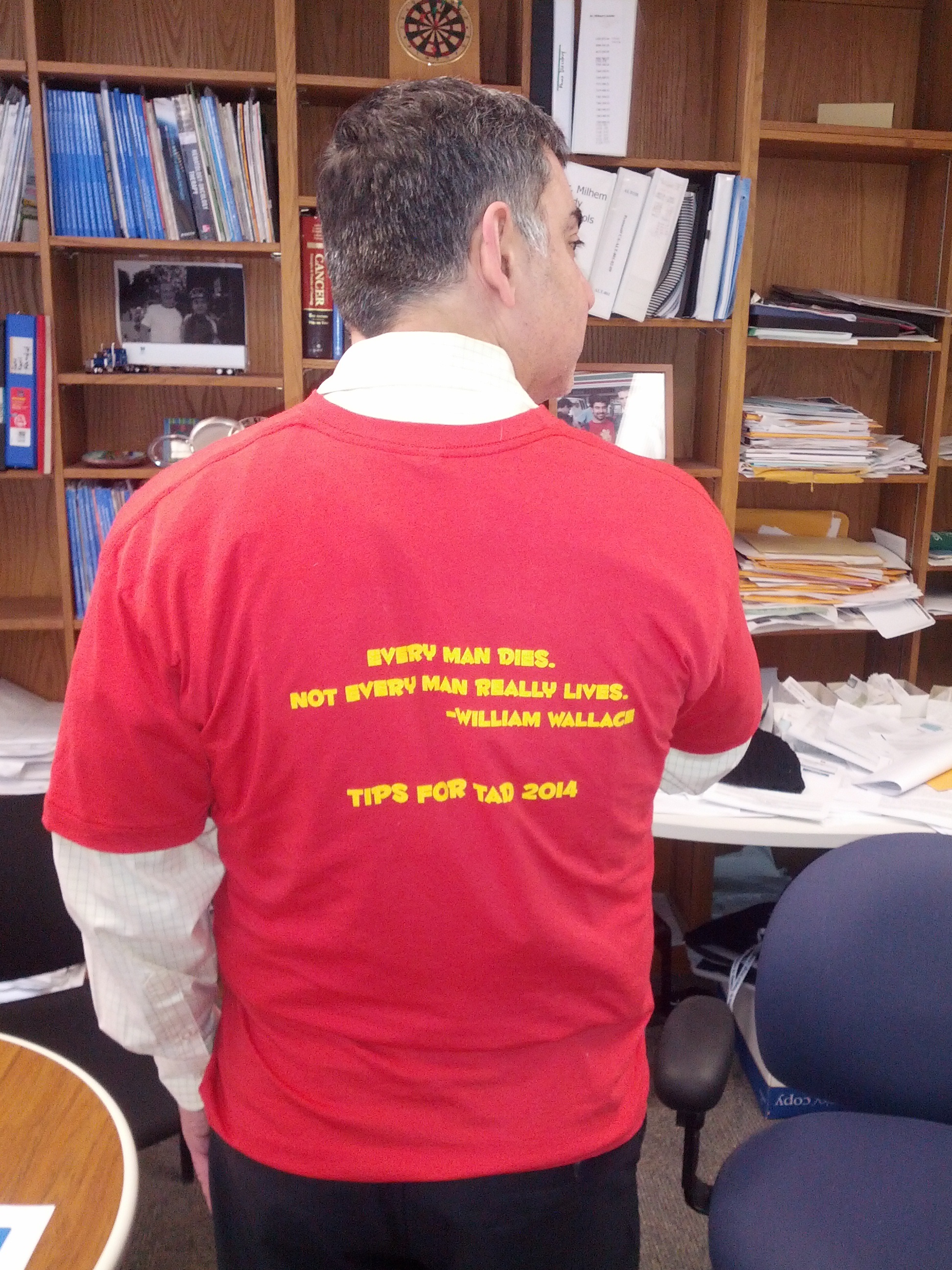
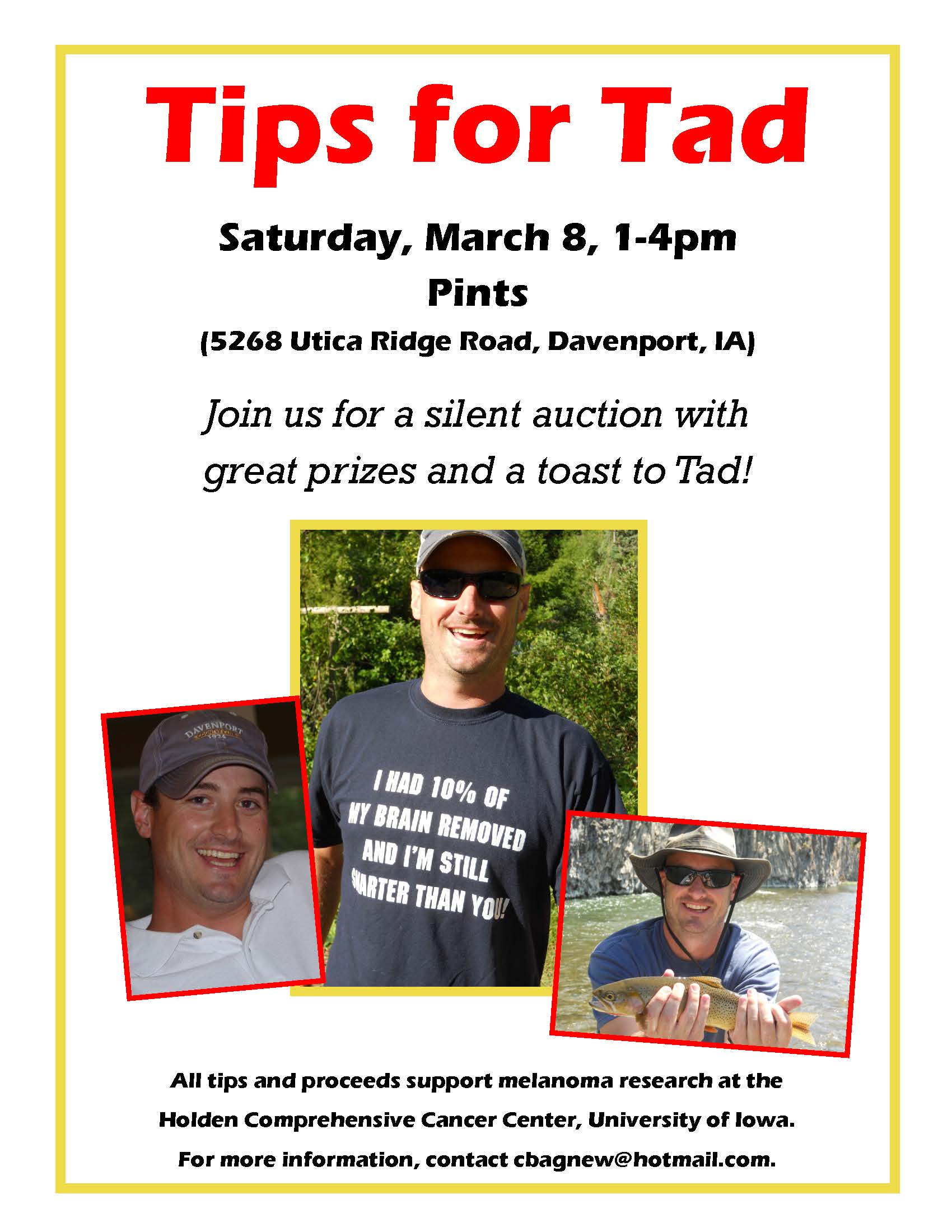
Tad’s impact went further than anything I could imagine. One month after he passed, friends of his gathered at a bar and collected donations to help my growing program. His parents whom I had met on his last visit came to see me to share with me the event that took place. I am humbled by the efforts of all those who have helped create snowballs that become avalanches that remove uncertainty from the knowledge of this cancer. Helping us find ways to wipe it out. Tad resonates deeply in my heart and he showed me that “Every man dies, but not every man lives” his most famous quote from William Wallace. Tad died, but he lives in the Iowa Melanoma program, moving the science forward in ways I hope he would be proud of. Each year dedicated friends and family gather round and make sure that Tad’s legacy remains that he was a man who decided to live his life despite all the odds.

Tad, I bow deep and honor your courage. You are one of my true heroes. Thank you.

Mo

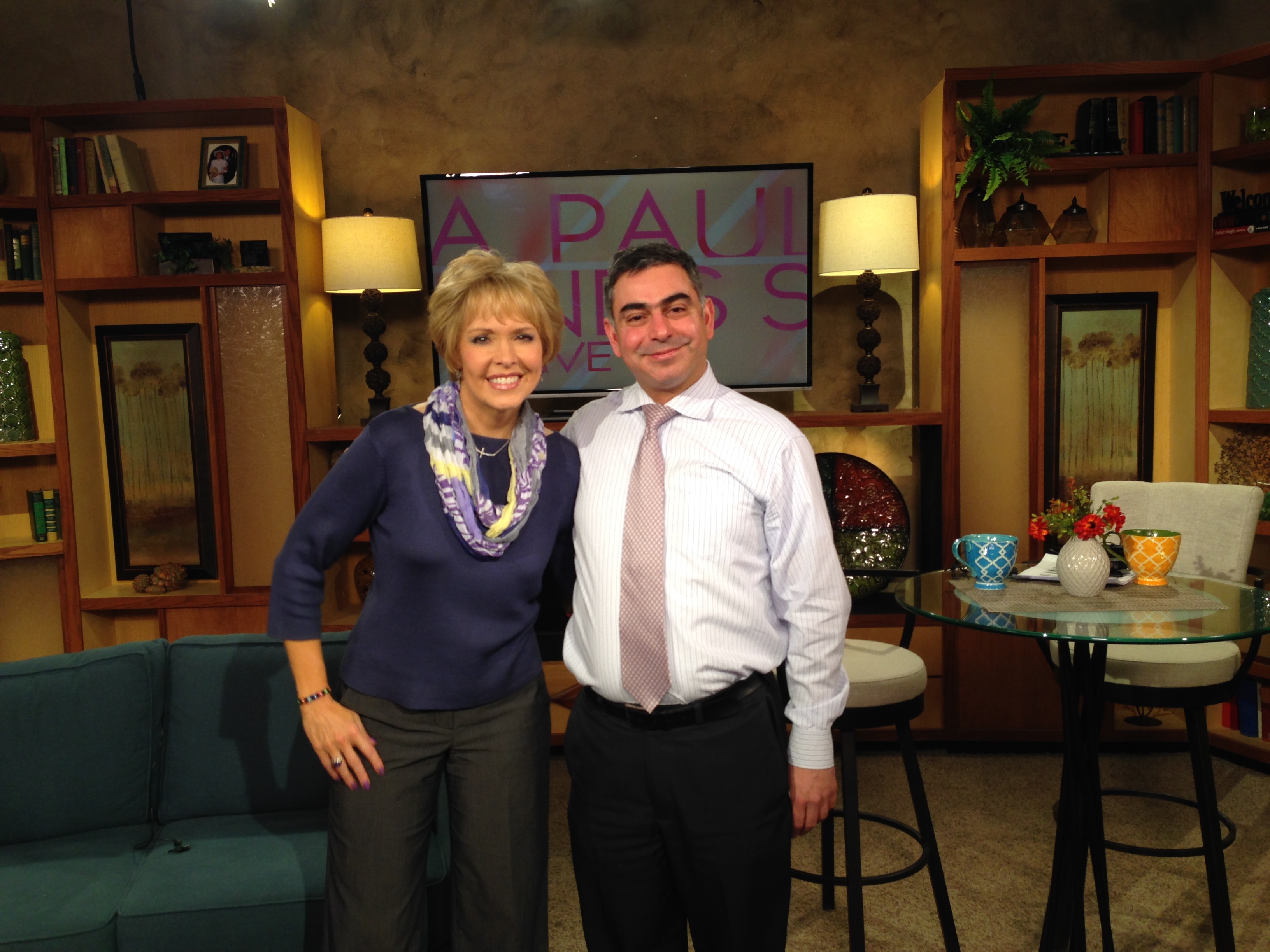
On Monday, March 3rd, I was a guest on the Paula Sands Live show in the Quad Cities, talking about Tips for Tad. Watch here: http://bit.ly/NUlU5P

Mo at Paula Sands Live

Mo tips for tad shirt

Tad Flyer


Interception

The little interactions with my patients are the highlights of my clinic. They help me in knowing them as people, understanding the pattern of disease globally and managing the side-effects that they could face. More importantly it is getting to know how they view their disease. Many of the therapies that we as oncologists give are as toxic and cause symptoms that can mimic the cancer coming back. It is hard to separate sometimes what is the cause of the complaint that people present with, is it the cancer, or the chemo? It takes time, a skill and patience. Providing the right atmosphere for the patient to talk is crucial for them to share freely their complaints. Providing a supportive and encouraging state, makes it raw and uncut but always honest.

Today one of my patients inferred that his disease was not responding to the chemotherapy that I was giving him. I listened, and let him narrate what he was feeling. He was feeling weak and had lost weight. I asked him some questions and he began to describe his symptoms. He described a high and low, like being on a roller coaster.  What appeared to me was a difference in the interpretation of his perception of what might be happening. I guided and steered him away from making assumptions, allowing him to tell me exactly what he was feeling. We juxtaposed his perceptions with what we both knew objectively and we worked together to a common ground where things were clearer.

I intercepted. I gave him my opinion that I felt what he was describing seemed more like the symptoms I would expect from his chemotherapy. I watched his face change expression. A relief came over him. “I trust you” he said “So you think I should keep going with the therapy?” Nothing had changed, it’s important to do the evaluation of the disease at the right time to make the correct deduction on whether the therapy was truly helping him. I stood by my recommendation, explaining carefully that it is hard sometimes to separate chemotherapy toxicity from cancer symptoms. His faith in the therapy seemed renewed and I said “it’s best not to cross the bridge before getting to it first”.

Mo