Category: Perspectives

  • Nik Jiruska: Ewing’s Sarcoma Survivor.

    July is sarcoma awareness month so I’ve invited others affected by sarcoma to guest blog throughout the month. Today’s blog comes from Nik Jiruska, a young man who battled Ewing’s sarcoma. Enjoy.

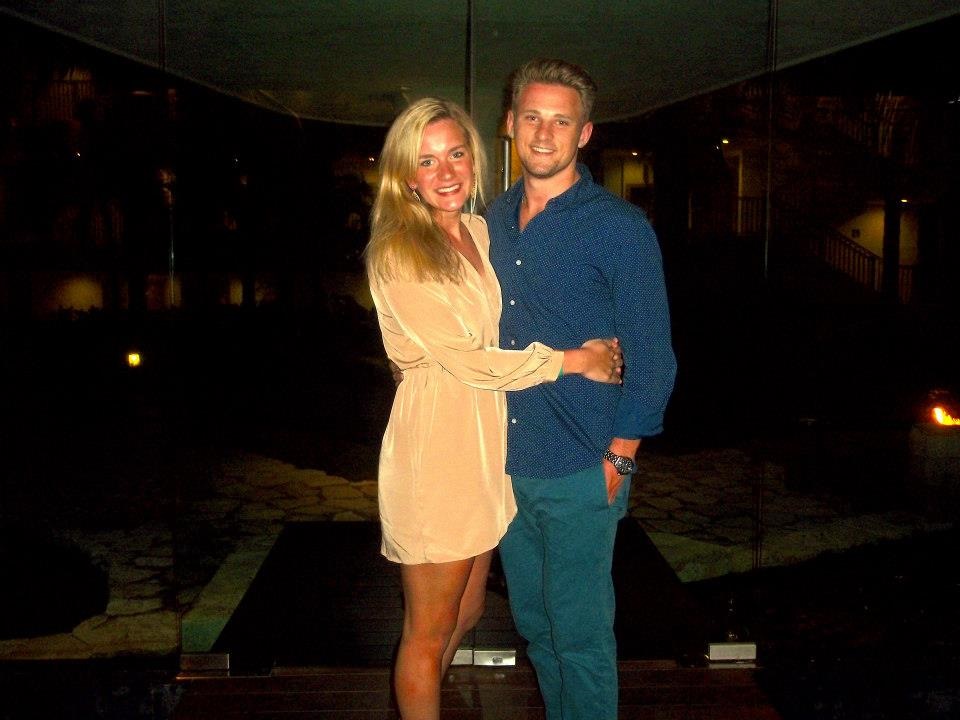
    My name is Nikolas Jiruska and I recently finished receiving chemotherapy treatments to fight a rare form of bone cancer called Ewing’s Sarcoma. This disease primarily affects children and adolescents, but I was diagnosed at the age of 20. It was a long journey, and I am fortunate enough to be able to say that I am now back at The University of Iowa nine months later and enjoying life more than ever. Now, let’s go back to April 2013 where my journey began.
    Nik Jiruska 2

    I started feeling pain in my left hip towards the end of April. It was a fairly mild pain and it would come and go every so often. I thought it might have been a pulled muscle or a pinched nerve. This persisted for a few weeks before the pain started to get worse. Fortunately, the intense pain waited until I was done with my final exams for the spring 2013 semester. I went to the emergency room at St. Luke’s Hospital in Cedar Rapids the first time the pain in my leg became unbearable. It started in my hip and would send deep, pulsing pain down my entire leg. They drew blood and took X-rays of my back and hip, but were not able to draw any conclusions from this work. I received some pain medicine and was told to keep monitoring my leg.

    The pain continued to grow worse and worse from then and I went to the emergency room two more times before I finally received an MRI. The ER doctor who was tending to me knew immediately that I had cancer after looking at the results of the MRI. This was the last thing I ever expected to hear, especially at age 20. The doctor arranged for me to go to The University of Iowa Hospital and Clinics immediately. My parents, girlfriend, and I left St. Luke’s and went straight to Iowa City in the middle of the night.

    After a few days of various tests, I was officially diagnosed with Ewing’s Sarcoma on June 4th, which also happens to be my mother’s birthday (happy birthday, right?). Although we had the official diagnosis, there was still a lot to do to find out if the cancer had spread anywhere else. After the initial blow from this horrifying diagnosis, we only received good news from then on. All of the tests revealed that the cancer was localized in my hip and had not spread to the brain, lungs, or bone marrow, which are three locations that this could likely spread to.

    At this point, I started my chemotherapy treatments and talked with my oncologist, Dr. Mohammed Milhem (just “Mo” for every one who knows him), to get an idea of what the next few months would entail. I would receive chemotherapy treatments every two weeks, alternating between two and five-day treatments. I would have five rounds of chemotherapy and then have more scans to see how it reacted to the treatment. Shortly after, Dr. Benjamin Miller would perform surgery to remove the tumor. We thought I would have to receive a hip replacement, but there was a chance I could also have a bone allograft surgery depending on how the tumor reacted to the treatment. After the surgery, I would go on to receive nine more rounds of chemotherapy for 18 weeks.

    It took me a few rounds of chemotherapy before I started to feel the effects. One of the effects that was the most difficult for me to grapple with was losing my hair. It was sort of my trademark and was a big adjustment in my life. However, a small price to pay, considering it would grow back eventually. Some of the other side effects I felt throughout my treatments were lightheadedness, fatigue, and nausea.
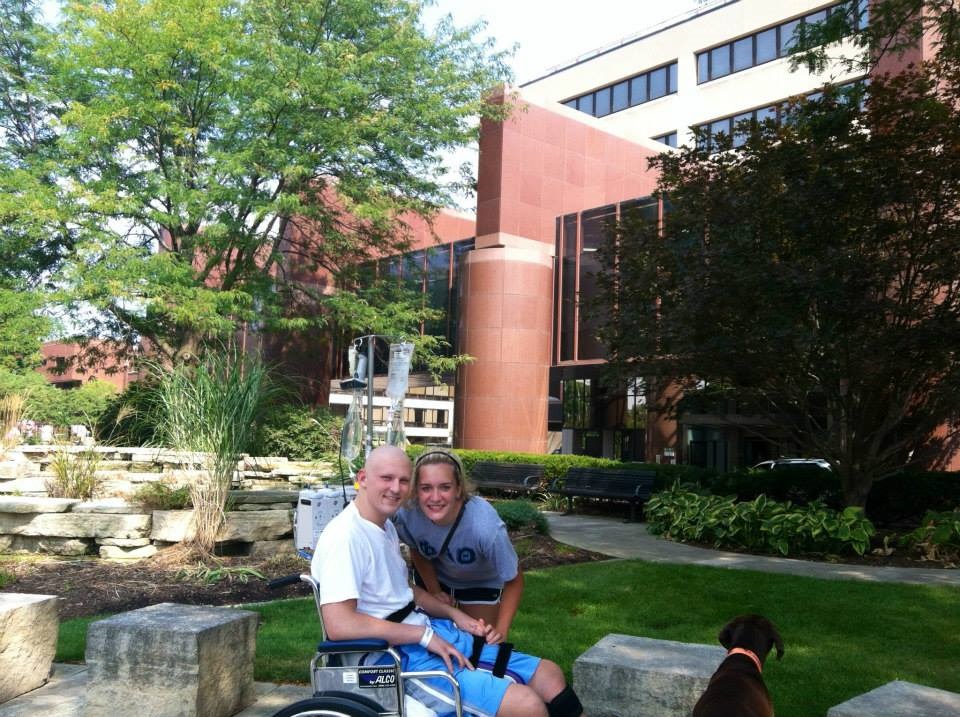
    Nik Jiruska 1

    The first five treatments flew by much faster than I had anticipated, and all of the sudden it was August. I had my scans and my cancer had reacted very well to the chemotherapy treatments, shrinking the tumor a lot. Dr. Miller determined that I would be able to have the bone allograft surgery. There is a longer recovery time with this route, but long-term, it would be better for my leg in terms of returning to normal functionality. Dr. Miller and his team performed a successful surgery to remove my tumor on August 21st. He determined that 95% of the tumor was dead and had been removed with clean margins. This was a big step out of the way, and everything was downhill after that.

    Perhaps it is only at this point in time that I can say that it was downhill after surgery. At the time, life was very difficult. I was not able to put weight on my left leg for three months because my bone had to heal around the graft, and when you are dealing with healing bone, everyone knows this is a very slow process. This lack of mobility along with starting my final nine rounds of chemotherapy made my choice to withdraw from school for the fall 2013 semester pretty easy.

    I do not know how I would have made it through those three months without my parents and girlfriend. They went out of their way to do things for me much more than they needed to. I am so grateful for them and what they did for me during this time, and during my whole fight. I primarily spent this time going back and forth between my apartment in Iowa City and my parents’ houses in Cedar Rapids, when I was not at UIHC for treatments. This was an uneventful time, to say the least. My days were filled with watching movies, Netflix, and playing videogames. It was the lazy time you fantasize about when you are living a normal, busy life, but believe me when I say this lifestyle gets old very fast.

    After beating five video games and watching countless movies and TV shows, my three-month appointment with Dr. Miller arrived on November 14th and he gave me the OK to start bearing weight on my left leg. Goodbye, walker and crutches. I started practicing to walk immediately when I got back to my apartment after that appointment. It was an awkward and exciting feeling. I had, and still have, an overwhelming feeling of thankfulness that I have the opportunity to walk, because not everyone is fortunate enough to be able to keep their limb when they are diagnosed with Ewing’s Sarcoma.

    At this point, life was getting pretty good. I was walking again and only had four more chemotherapy treatments to go. However, my last few treatments were delayed because I was really feeling the negative effects of the chemotherapy and I was not meeting the required blood counts to be able to start the next round of treatment. I had to receive a handful of blood transfusions during this time to help meet the blood count requirements. Thinking about it now, these setbacks were not a big deal at all compared to what can happen when receiving chemotherapy treatments. At the time, though, it seemed awful because I was so anxious to finish and get on with my life.

    Finally, January 3rd came around and it was time to go in for my final chemotherapy treatment. Unfortunately, this had to be a five-day treatment. The longest five days of my entire life, I think. My girlfriend stayed with me every night in the hospital, as she did during my treatments in the summer months, which made everything a lot more bearable because she is a very comforting person to be around. The wonderful nurses of 4JPE in UIHC presented me a beautiful cookie cake to congratulate me on my final day. I then returned to Cedar Rapids for a couple of weeks of rest, relaxation, and relief before I would return to school. I returned to UIHC three weeks after I completed chemotherapy for a bone scan and CT scan to make sure I was clean. Sure enough, the scans were clear. We were all optimistic that this would be the case, and it was truly a wonderful feeling. Time to get back to life.

    I am sitting here writing this now and I do not feel bitter about having to have endured this experience at all. I have only to be thankful that I survived it. Also, as odd as it may sound, I am sort of thankful that I went through this experience because I learned a lot about myself during this time and it strengthened my relationships with those closest to me. I want to conclude my story by saying that you should never overlook any pain or odd feeling you may experience in your body. I did not do this and the early detection of my cancer may have saved my life. I also want to give thanks to my wonderful caregivers throughout this journey, including Mo, Dr. Miller, my parents, my girlfriend, and the nurses of 4JPE, 4JPW, and 2RCW.

    -Nik Jiurska

    Nik’s girlfriend made a surprise video for him at the completion of his chemotherapy. She got many of Nik’s friends and family involved in this video, including a celebrity or two. Watch the story from KGAN News Channel 2 and then watch the video from his girlfriend here.


  • Yell

    Her face was ashen as she walked into the clinic room. Her movements were slow, and deliberate. She was clearly significantly fatigued. Not the bubbly person I knew her to be 2 weeks ago. Clearly something was amiss. I was walking to see another patient, but my critical eye could not dismiss that my patient was in dire distress. When it was her turn to be seen, I entered her realm. She was lying on the examination table with a blanket up to her chin, the blood pressure cuff was beeping a bunch of numbers at me, and the room’s neon lights were turned off to make her more comfortable. I stood at the foot of the bed and looked deep into my patient’s eyes. Examining her as I would, fully present, I noticed as my coordinator scurried to remove the cuff from her arm and get her papers together. My patient was in trouble.

    I looked deep into her eyes. She was participating in a clinical trial offering a new agent for the treatment of her disease. It was clear to me that the treatment had taken its toll. I was saddened and angered by her ill physical condition, but how can you show your anger to a person you highly respect. Someone who had taken a chance to help herself and so many others by participating in a trial that might define the next treatment for the generations to come who are plagued with this disease. I asked her husband “How long has this been going on?” He replied “for the last 10 days. She has been sleeping for almost 18 hours a day.” She was fatigued to the point it was interfering with her life. “I did not want to bother you”, came slowly from her lips “I just pushed on wanting to make the treatment successful”. Ah, that common feeling of wanting to do more than what is expected. Here is what I have to say to that, to the patients who feel they do not need to reach out when they are in trouble. Don’t be silent, YELL. Let me know, make as much noise as you need to, your voice is always heard, you are alerting me to things I want to know and things I can help you with, averting a potential danger. Don’t wait, don’t ever think you are a bother, and don’t ever imagine you interrupt or annoy me; I want you to be an honest messenger to an event that I can help you get though. You are a beacon to help me, and I am the lighthouse that shines the light to help you through these troubled waters. YELL.

    We talked through humor and we made a laugh of it, I guess that is the way to express your anger to those you respect. “I am such a Dodo” she said, “I just did not know that I could bother you even with this”. Her husband’s eyes filled with tears as he realized he could have intervened earlier. “It’s ok” I said, ” I’m an oncologist more is always better, let’s hope it kicked your tumor’s $@# for the trouble it has put you through”. That brought a few cackles. I saw what I needed, the relief that she had shared her trouble and that once again it was not her responsibility for the decision. It was mine. I reassured her, asked my coordinator to check on her every other day; till I knew she was out of the woods. I said “it’s not your decision any more to just not tell me, I am going to have someone call you to make sure you get out of this, safely”.

    My friends, yell, when you think it does not count, yell and you will be heard. It’s my job to make sure you live your life, and not suffer unnecessarily. Yell. I want to know how I can help you. I will always be there, and with the knowledge I have I will guide you to safety.

    Mo

  • Invitation

    “Just tell him he has more than 4 weeks to live”, her eyes welled up with tears. I reached for the tissues that are so conveniently placed in every room in the cancer center. He had sarcoma in his lungs, and the surgeon could not remove them after taking him to the operating room. He had recovered remarkably from the surgery and had come in to the office to talk, perhaps seeking re-assurance. He said “I keep thinking about my grandson, and I want what’s between my ears to stop thinking so hard about it”. I handed him the tissue now because he had started to cry. A common occurrence in my clinic, that emotions are powerfully shared. We all know we are eventually going to die; the acuity of the realization always hurts. I reassured him and his wife. He likely would not die in 4 weeks, and I had treatments up my sleeve. He was receiving an invitation from death, that he was next. How do you as a human being understand that you have to die at some point and reach acceptance? If death had a language how would it knock at our doors?

    He left feeling better that he had come, I was glad to relay to him that death, albeit near, was not as imminent as he thought it was.

    Events in my clinic remind me of a lot of death. It hovers around me like a teacher, not an enemy, and it speaks a language we are young to understand as humans. I want to share it more openly because many are frightened to talk about it. I might be very comfortable with the notion of dying, but in me there is a unique struggle that I share with everyone who gets a call from cancer to die. For starters they meet me and they begin a journey each one different. It’s like looking into a kaleidoscope the richness of colors, shapes, beauty and vitality that the human spirit brings with it. There is also the fear, the aloneness and the uncertainty of the how? When? And why? Questions I have yet to answer accurately. I had a conversation with a colleague as I waited for the bus to go home. She talked to me about a patient that just wanted me to call him. He had transitioned to hospice. She told me he was so appreciative with the decisions we made that had given him 4 years of survival. Of course I will call him I told her. Many thoughts as I bobbed up and down on the bus, it has a way of percolating thoughts, having someone else steer you to where you need to go so you get to focus on other things. I have often told my patients, sit back, I am the bus driver. It might be rocky but I will drive with what I know.

    How do we end this conversation? Well consider it a beginning of a deep understanding of a process of life we choose not to acknowledge until we receive the invitation to understand it. We focus on health, love, family and life. We do not talk about an inevitable process called death. It might be very lonely sending us invites welcoming us to the next process. It is sobering to discover that which many fear in their hearts teaches a deeper wisdom that is appreciated. I too travel to my own, and I wait for an invitation to join those who have already passed.


  • Trash

    Once a week we are all cognizant of taking out our garbage and filling our recycling bins. It’s an active act on our part that requires the patience to collect, sort and remove waste from our homes. But it is not all us. There is a dedicated service that comes and removes it from in front of our homes every day whether it is raining, snowing or just plain humid. It appears to be important for each one of us weekly. Some of us look forward to it; some of us actually dread it. What is clear is that the service runs daily with a dedicated staff that makes sure that this is done consistently throughout the year. It is amazing, noble, and often forgotten.

    I was born in a small town called Ahmadi in Kuwait, where I lived until the Iraqi invasion in 1990. While this moment in my life is filled with many stories, I will choose one that I truly feel has touched me more than anything else I know about how communities thrive. During the occupation of Kuwait in the beginning several months, all public services ceased to exist. The one service that was sorely missed was the garbage truck that took the trash from in front of the people’s homes. As days went by, I watched as piles of waste increased on the streets, in alley ways and in front of large mansions. It was filthy, smelly and nauseating to walk amongst these streets. Flies and rats became plentiful feeding off what people threw out. It was a frightening vision of the importance of not forgetting how vital this service was to the community it served.

    Once a year, we are pleasantly reminded that it is “Melanoma Awareness Month” and through the commotion of our lives we attempt to do our best to make visible that which needs to remain constant throughout the year. Three of my friends shared with you stories that spoke of their struggles with this deadly disease. There are many more that go untold that are held in the hearts of the dedicated staff that work diligently all year long to provide the care that my patients need. Today I sat in clinic and watched each one of them do their work. Their work may feel inconsequential, my nurse answering a patient phone call, my medical assistant “rooming” the patients and my physician assistant telling me the latest troubles of the patient she had just seen. In my eyes, each played on their instrument strumming almost perfectly. I can only imagine the amount of chaos, just like in Kuwait, if I did not have my team. What an honor to be a part of them!

    In this month with my heart, I take a moment, to honor the untold stories of our heroes, those who make their lives a part of others helping them through difficult times, the families that support my patients traveling through these troubled waters.

    So the next time you take out your trash, reflect on that which really is taking care of you.

    Mo


    In case you missed my guest bloggers who wrote for Melanoma Awareness Month, here are the links to their stories:

    On May 7th, Tom Armitage shared his battle with melanoma in his blog entitled “I’ve Got You Under My Skin”.

    On May 14th, Molly Menard shared the story of her husband’s fight with melanoma in her blog entitled “Melanoma? That’s it?”

    On May 21st, Brett Yates shared his father’s journey with melanoma in his blog entitled “Cheers and Have a Wonderful Life”.

    Thanks to all of my guest bloggers who shared their stories this month!

  • Cheers and Have a Wonderful Life!

    Since May is Melanoma Awareness Month, I’ve invited others affected by melanoma to guest blog on the 7th, 14th and the 21st. I’ll wrap up the month by blogging again on the 28th. Today’s blog is written by Brett Yates. Enjoy.


    We’ve all been conditioned to get our regular checkups, right? A physical every year. A dental cleaning twice a year. We even get the car oil changed every 3 months. Why isn’t a skin cancer screening on that list of necessities we take care of each year? It should be.

    Our Story

    We had known that its return was possible for years, but if I’m honest I wasn’t considering it seriously. So, on January 31, 2011, it was with great surprise and shock we learned that my father’s melanoma had spread. Dad was first diagnosed with melanoma in 2007 when a tumor was found growing on his shoulder. It was surgically removed and he hoped that would be the last he would hear of it. It returned 3 years later and was again surgically removed. But this time it stuck around. Tumors were discovered in his liver, lungs, spinal cord, and brain.

    From the time of Dad’s original melanoma diagnosis in 2007 to the end of 2010 before his tumor metastasized, his life was fairly normal. He was getting checked regularly and doing everything a person with a melanoma diagnosis should do. However, once the cancer spread, it did so with a vengeance. We had less than 3 months with him after the stage IV diagnosis.

    Brett Yates- Yates Family

    My brother, Dustin, recalls one of Dad’s last outings:

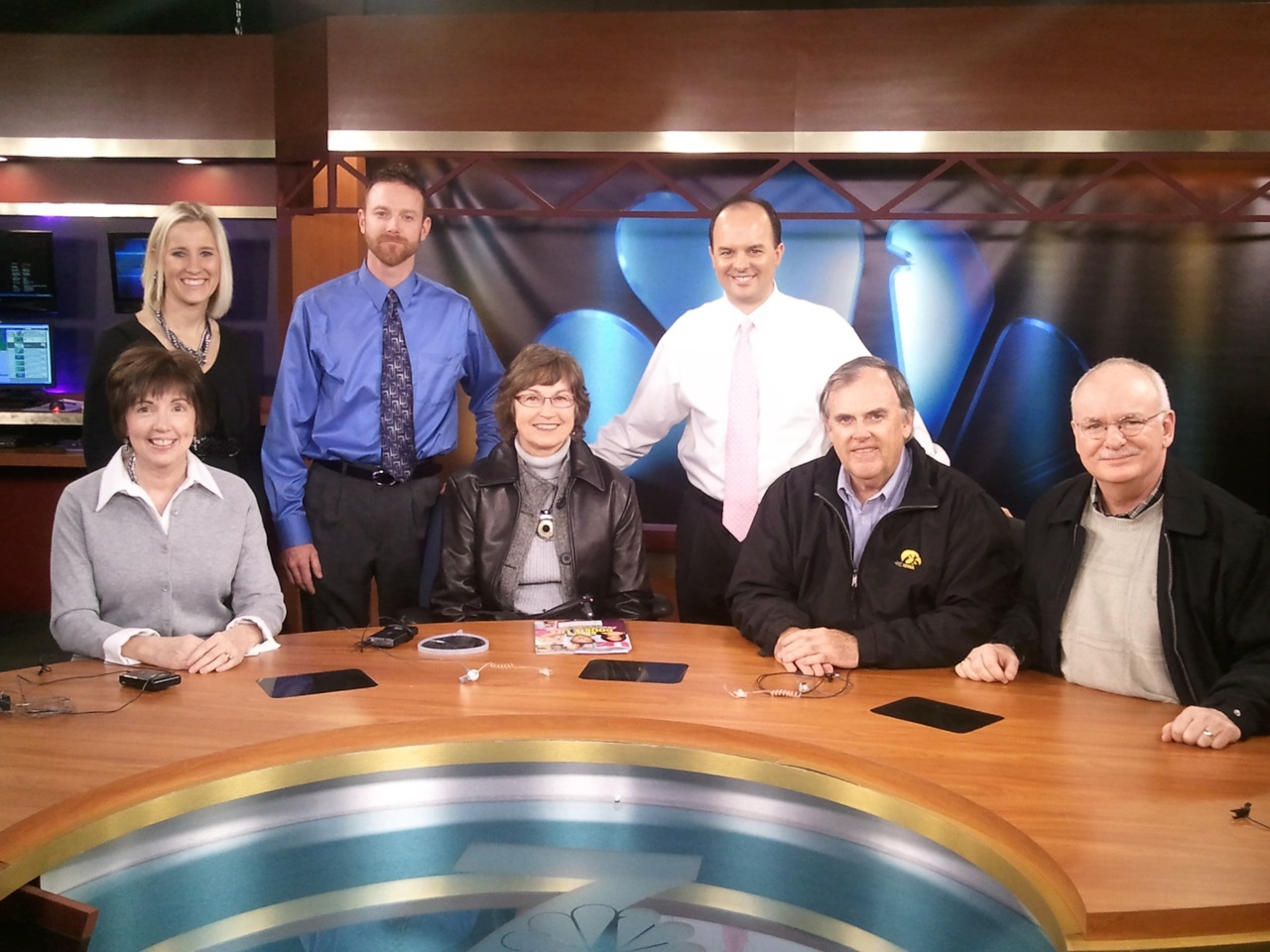
    “I remember Dad had wanted to go down to the KWWL studios for quite some time for a tour and we finally got it scheduled. It just so happened to fall on Valentine’s Day 2011. We made an evening of it and surprised him before we went out to eat. He had no idea that we had been planning it. He was very surprised. He got to meet the whole group and even got to sit in Ron’s chair. I’m forever grateful to Mark [Schnackenberg], more than he’ll ever know, for being so generous in allowing us to come for a tour and even hang out for both of the evening newscasts.

    Who would have known at the time that it was one of the last outings with Dad. It also turned out to be the last picture of him. Looking back at it now, I can’t help but think how very thankful I am that we were able to do that for him.“

    SAMSUNG

    Who Was My Father?

    To give you an idea of who my father was, what his effect on the world was, I need only tell you about his visitation. I stood for nearly 4 hours greeting a line of people wrapped around the block who had come to pay their respects. Many waited in line for an hour and a half before reaching the visitation room. My father had an effect on people the extent of which I hadn’t truly known until that visitation. He had a quiet emotion that was often hidden behind his strong, boisterous personality. I think that is what endeared him to so many people. He loved life so clearly and loved the company of others. It’s that effect on people we should all strive to replicate. And if we’re lucky, maybe we’ll have the same turnout when it’s our time.

    Brett Yates- Steve and Sons

    How We’re Fighting Melanoma Now

    Playing golf was one of Dad’s favorite pastimes, so every year around the anniversary of his death, we gather to celebrate his life over a round of golf with the goal to raise money for research and awareness of melanoma. To date, and with the help of everyone who participates and donates, the tournament has raised over $50,000 for research being done by Dr. Mo and his team at the University of Iowa.

    Brett Yates- SYMA Check

    My mother describes the reason for wanting to do the golf tournament by quoting something she read once:

    Why does God allow disasters to happen? Is He punishing us? The Bible does not give an adequate explanation for disasters any more than it can for diseases such as cancer. There are times when no answers will do. There are times when nothing else will do except we roll up our sleeves and pitch in to do whatever we can to reverse the bad fortune of the moment.

    Brett Yates- Steve and Lani

    We’re hoping to do the golf tournament each year to continue the fight against this terrible disease. We would love to get more people involved. If you’ve been affected by melanoma in some way, maybe you have a family member who has died, maybe you’ve survived melanoma yourself, or maybe you just want to be involved, we’d love to hear from you. This past year, Molly Menard, who wrote last week’s post, was there with doctors from Iowa City who volunteered their time for free skin cancer screenings. Those screenings may have saved someone’s life!

    Let’s work together to end this disease. We’d love to acknowledge you and your family at the event. We’ll even change the name of the tournament to the Iowa Melanoma Golf Tournament (or something more catchy :)) if more families join the cause. You can learn more about the tournament at www.steveyatesmelanomaawareness.org.

    A Final Note From Dad

    I’ll leave you with words from Dad himself. Quoted below is an email he sent to his colleagues at John Deere upon his retirement. It is surprisingly appropriate, especially if you think of his retiring not just from 31 years of work, but from 63 years of life.

    “Well my time has come. It’s time to hit the send button on this last e-mail.

    Today is my last day as an active John Deere employee. I do not know where the time has gone. It has been a good run, but I am looking forward to the change. I’ve known many of you for more than 30 years. Some say the toughest part of retiring is saying goodbye to friends and colleagues…

    Well, for me…what they say is true.

    I wish each of you all the best in the years to come, both within John Deere and personally.

    I’ve enjoyed working with…and knowing…all of you.

    God’s rich blessings and best wishes to each of you.

    If you need a 4th to complete a foursome sometime…give me a call.

    Cheers and Have a Wonderful Life!!”

    Brett Yates- Steve North Endzone