
Blog

  • Holiday.

    What does that word mean to me? My patients battle daily with cancer and the therapies I impose on them. Coming in for their chemotherapy; tolerating the side-effects. They grow weaker and more tired as the cycles trudge on. It’s like doing 100 miles on a bicycle ride. The first 25 miles has me saying “I can do this”, the last 25 miles I am screaming “when will this end?” That is the closest I can come to imagining what they are possibly going through.

    I watched today as I told my patient “let’s take a break, a holiday; a chemotherapy holiday”.

    He looked at me and said “really?”

    It is always fun for me to break this type of news. It’s when I get to really say “yes, you’re done with the therapy and your tumors are stable and not growing, I do not see a reason to push this treatment any further. Take a break”. I smile ecstatic, “stay away from Mo” (that brings a laugh). “Let me see you back in 8-12 weeks”.

    “Wow that long huh?” This is usually followed by a sigh of relief, and I sometimes see a small “Mo are you sure?” or the even better look  “3 months away from you, I think I will miss you.”

    It tickles me to send them off. They need this break. It’s what they fought for. They go back to life; to their days, it’s a road to recovery. Like the changing seasons. On therapy, it’s like autumn becomes winter, and off therapy it’s like winter wakes up to spring. I bet you cannot guess what I look forward to the most. Go on… guess?

    There is a joyous moment in my heart in meeting my patients 3 months after they are done with their chemo, and it truly is that I forgot what they looked like with hair.

    Mo
  • Orphaned.

    Everyone in the room is quiet.  I feel like the old man leaning forward looking through my glasses understanding the situation but not fully. As an observer  I have seen it, can describe it but I am not experiencing it myself. No one in the room can appreciate that struggle. Three situations have made me think differently this week about cancer and what I do.  So lets navigate the spheres of care. The psychological, the spiritual, and the physical realms that humans use to perceive their surroundings.

    I walk into a room and pull up a chair. I feel separated from my patient because of a new unfortunate event. I start to talk. The power of words, trying to reconnect and asking politely to let me back into their struggle. My patient said to me “Mo I can handle the pain but not the emotions of this struggle”. I acknowledge this. I do not underestimate it. Anxiety and depression makes a patient alone as if  orphaned by their diagnosis struggling at their core to make sense of things. The psychological scramble.

    My patient sits across from me, my last one for the day I think to myself, going home soon, the day is done. Then out of the blue as I describe the cancer, I hear the words “Mo you talk about cancer very  spiritually.” Revelation. Taboo, should not talk to this person about this right now, no religion allowed. That’s the training. My indoctrination. But honest that was one of the best conversations I have ever had with someone with this disease.

    Challenged. My patient stares at me but does not understand. Waves at me and smiles. That innocent oblivious smile. Someone else is making this decision for them. They are in pain and the people around perceive the situation but are unable to communicate it truly and fully. How can this paradox exist you might think? In a challenged intellect perhaps where explaining the physical does not help, words are of no use and an orphan appears.

    Three unique situations. Each one with no real guidance on how to approach them. Am I the pioneer then? Don’t want to be. But clearly we have to start thinking of this disease as different and evolve more holistic approaches to help those who it encompasses.  Perhaps we have to explore it in places we dared not go before. Like orphans exploring parenthood for the first time.

    Mo

  • How?

    “You got me this far” he told me. And then making it more difficult “I trust you” he added. Perhaps these should be easy words to hear and I should be proud that I was able to do something and be commended. But it’s the other words that linger “I trust you” he repeated. As I build my relationship with patients I become part of their successes, goals and their life. I am someone that they know, have shared their hardships and deepest thoughts. I am told that it is best to have barriers and not to get involved with them. I am told that I should find ways to separate me from them.

    How?

    To me this responsibility, this trust is crushing. It generally sends me reeling trying to make sense of the inevitability. Perhaps now I understand the spouse and her tears. How do I comfort? With my knowledge that has failed? With my compassion that I disguise?

    But it does not end there; there is a question that I have loathed. “How long do I have?”

    Is there a stamp with an expiry date? Perhaps I missed it in my examinations. That is what I say out loud, angrily perhaps? Do you say you did not climb Everest when you got only half way? When you stood at the bottom of the mountain and your first words were “I cannot do this?” Now that you are half way, what should I say about the journey so far? What about the goals we reached the times we shared? Just because I could not get you to the top what should I do? That is why my patients are amazing. It’s the first statement “you got me this far” that makes me heal.

    It reverberates deeply in my mind. What strikes me down to my core beyond words that I feel do not understand.

    How do I say goodbye?

    Mo

  • Muffled.

    This is a difficult blog for many reasons that I will not divulge. But I will take you to where I am. 

    Immerse your head under water at a poolside. Around the pool you can hear the loudness of all the people around you. You dip your head to dive beneath the water. As you dive deeper these voices fade and become muffled. Submerged you know there is something out there but you are unable to understand it.  There is some security in not being able to hear exactly what is being said. In the water you feel somehow protected, but vulnerable because of this perceived security. Those standing outside the pool talking about you, trying to explain complexity to you. You hear a little but you choose to stay secure. This is where my patients go when they are diagnosed. When what I say to them does not quite sink in. That they do not fully grasp what I am saying. This is how I am feeling.

    There is a movie called Mask in 1985, it’s images cross my mind. The boy in it has a rare disease, and he attempts to share what he understands about color with a blind girl. He takes a stone and explains blue by placing it in a freezer and then giving it to her. He explains red by giving her a stone that was thrust into hot coals.  I was 14 when I watched this movie. Incredibly done to truly explain color. Blue=cold, red=hot. Blind, deaf, or disabled. Can we as physicians really be sensitive to communicating accurately the true nature of cancer? Are we aware of the refraction index of our knowledge that feels to a patient like voices striking water while they are fully submerged? How can we measure understanding? How do we engage our patients in helping them make the right choices? Can I make them see color or feel it if they are blind?

    30 min. That is the standard clinic slot for a patient. Seriously, is this the “business” of medicine?  What happened to the art of healing? Can I tell someone their leg needs to be amputated in such a short time?  It is vitally important for me to offer each patient a chance to understand their disease. Sometimes in giving clarity, truth is not kind.

    Muffled is the outside voices. The truth cutting its way through. I sit in silence, my greatest teacher. Can I help my patient reach the surface to hear me loud and clear?

    Mo

  • Firecrackers.

    Firecrackers. I am talking about the small ones, that make the loudest noise. You know the ones, you light the fuse and then “BAM”. They are loud. Startling in fact. Pleasing. Frightening. As a child I use to love to startle people. I do the same now but I call it illumination. It is possibly how I teach those all around me. So as your read this make sure you imagine little sparkles of exploding energy with shrieks and cries of those who are startled.

    Raw is the emotion of a patient with cancer. Most dive into sadness. But some into rage. Exploding with questions and a need for answers. A demand for the whys? You can almost hear them. Listen……..

    When I counsel a patient I draw from my own experience. If a fiery 19 year old comes in to talk to me, I engage in the most rigorous discussions. I can feel the 19 year old in me raging against the diagnosis, battling to be free and I feed into that. I look at the person in front of me and I say in my heart- don’t change. You are so beautiful, and thank you for sharing it as it is. I think they just do not want to accept the reality around them. They want to fight.  And they want me to erupt against this beast that is attacking them.

    Do we not all do this in seeking our independence and freedom from many things around us? Is the usual passage of human beings to be accepting and tolerant of their surroundings? I envy those who stand and say “no, this is not happening to me”. I look back at my life and say, I’m glad I said no to this or that. When I walk I snap my fingers pretty loudly because it helps me think. I find comfort in this sound because it reminds me to forgive anything my patients says to me when they are angry. Perhaps in some way I am forgiving my rebellious self.

    So when you hear me in the halls snapping away, know that I carry in me all the firecrackers that said no to cancer. Like pins and needles they illuminate the way. Poke away my friends.

    Mo

    Midwest Sarcoma Trials Partnership
    Midwest Sarcoma Trials Partnership

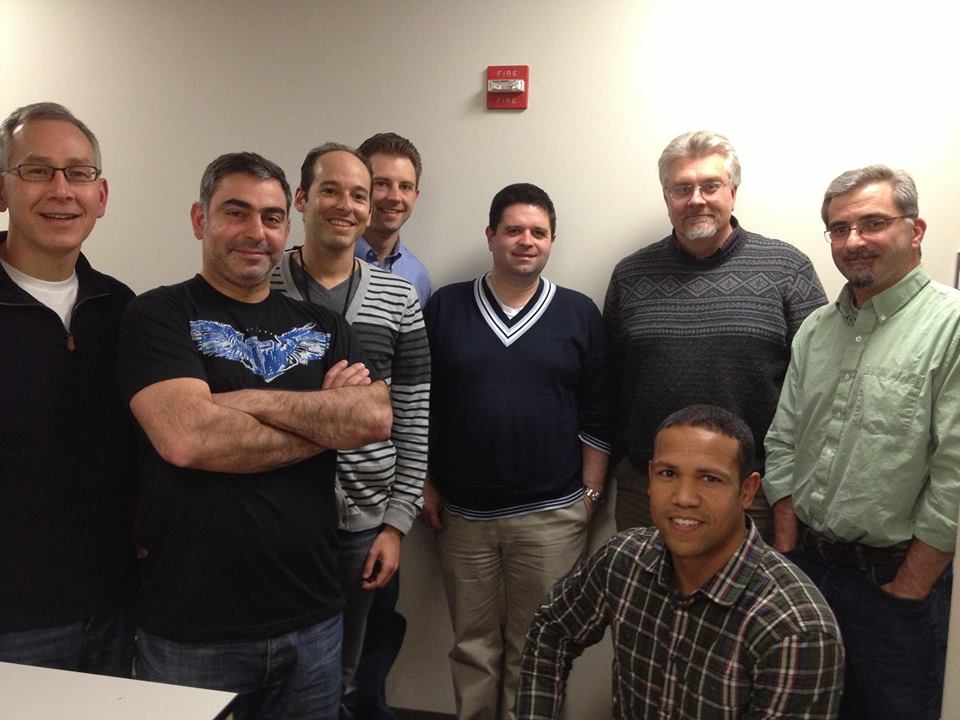
    Thanks to all of the firecrackers that exist. This group (above) came together in March of 2013 and became the Midwest Sarcoma Trials Partnership (MSTP).

    MSTP
    MSTP