Interception

The little interactions with my patients are the highlights of my clinic. They help me in knowing them as people, understanding the pattern of disease globally and managing the side-effects that they could face. More importantly it is getting to know how they view their disease. Many of the therapies that we as oncologists give are as toxic and cause symptoms that can mimic the cancer coming back. It is hard to separate sometimes what is the cause of the complaint that people present with, is it the cancer, or the chemo? It takes time, a skill and patience. Providing the right atmosphere for the patient to talk is crucial for them to share freely their complaints. Providing a supportive and encouraging state, makes it raw and uncut but always honest.

Today one of my patients inferred that his disease was not responding to the chemotherapy that I was giving him. I listened, and let him narrate what he was feeling. He was feeling weak and had lost weight. I asked him some questions and he began to describe his symptoms. He described a high and low, like being on a roller coaster.  What appeared to me was a difference in the interpretation of his perception of what might be happening. I guided and steered him away from making assumptions, allowing him to tell me exactly what he was feeling. We juxtaposed his perceptions with what we both knew objectively and we worked together to a common ground where things were clearer.

I intercepted. I gave him my opinion that I felt what he was describing seemed more like the symptoms I would expect from his chemotherapy. I watched his face change expression. A relief came over him. “I trust you” he said “So you think I should keep going with the therapy?” Nothing had changed, it’s important to do the evaluation of the disease at the right time to make the correct deduction on whether the therapy was truly helping him. I stood by my recommendation, explaining carefully that it is hard sometimes to separate chemotherapy toxicity from cancer symptoms. His faith in the therapy seemed renewed and I said “it’s best not to cross the bridge before getting to it first”.

Mo


Reconciliation

I shared an email I received from a patient’s wife in clinic today. That patient had passed away a few years back. We were all sitting in clinic going about our daily business. The email asked me to say “hi” to everyone. I had forgotten about it but then someone reminded me of him. So I pulled it out and I shared it out loud.  It tugged at us and told us “you are always in our hearts”. As I was reading I was unaware that Wendee my nurse had started to cry, she sobbed “don’t they know that they never leave us too?”. Everyone around me was silent, and I said “I think they do know”. The email was gracious, magnificent if you asked me. She was telling me that she loved my blog and that she felt her husband beside her as she read it, that his children, when they grew older, would read it too. She thanked me for the years I gave them together and how she held us in her heart, of how we are always on her mind.

I take the bus home on occasions. It was a strange ride for me today. I could not shake the feeling of this email, it stayed with me. I had read this alone and it had a different effect. It was Wendee’s words that were echoing in the hollows of my mind. I stared at the advertisements that were plastered on the bus. One said in bold letters “have you ever saved a life?” My thoughts floated away, I remembered a younger version of myself talking to this man as a brother and confidant. I remembered our bond, our relationship. Paul Coelho a Brazilian lyricist says “When a person really desires something, the entire universe conspires to help that person to realize his dream.” This was this man to me. He was a pragmatic man that understood his fate, but he realized a dream that I could not possibly understand. Here was his wife thanking me for years I gave. Yet I felt I lost the battle. The truth is no I did not “save” a life.

The bus stops close to my home but a walk away. I crunched through the cold, walking to my house. Thoughts and images of my interaction with him. I miss my friend. What a man he was. A man of my age, his wife still thankful, still appreciative, still supportive. “Do they know they never leave us too?” And I reconciled that disconnect that I have. I felt I failed, and she felt I won. Simple exchanges from one human to the next make a difference far greater than one can expect. I really appreciate the kindness, in helping me feel a loss is a victory nonetheless. 

Thank you.

Mo

A confession to a friend

Dear Hannah,

Where does one start to talk to you? I guess simply saying happy birthday might be the easiest place. Last week Iowa read about you and it was refreshing to see how they were saying we miss you.

I remember when I first met you; I kicked your family out of the room so you and I could talk alone. Something tells me you liked that, and you felt I wanted you to tell me what you wanted from me as your physician. I acknowledged your adulthood and maturity. You had grown too fast while facing your cancer. That day we formed our bond of trust. I am honored to know that your family shared with me that you valued what I had to say. I felt very deeply about you and I was hurt badly the day you left us.

I read Molly’s blog with a deep admiration of her courage and how she wanted to grow.   I mustered up the courage to talk to you in a letter sharing my thoughts that have needed to come out. It is my way of closure. You stretched my heart to a place it had never been, your search for hope in me made me realize how we believed in each other. Knowledge of things sometimes makes it harder to watch what actually happens. I confess that I struggled to tell you in part due to how I felt. Your amazing spirit, the love of your family gave me the strength to do so.

I remember the love around you. The fear, the kindness and the respect. I remember your quiet demeanor.  On the day I knew it would happen, I stood silently beside your bed. I fought back my tears as I watched your shallow breaths. I sent you a million prayers in my heart, my eyes talked to you as I stood there in my own language and I said goodbye. Something I have done to so many who have allowed me the privilege of being a part of it.  

Perhaps I am realizing now that I can talk to you every day. Through those who love you and care.  

Dear Hannah with love from Mo.


My sister, my friend

Molly McDowell was only 21 years old when her sister died from osteosarcoma. The loss was deep and personal to Molly so she has dedicated her life to raise awareness of the disease and to get involved with research. She has applied for medical school and hopes to be a pediatric oncologist specializing in sarcoma. Today, Molly takes over my blog and tells her story of her beloved sister, Hannah.

“Metastasized…multiple lung and brain lesions…clinical trials…continue living life to the fullest”. I let the words sink in and repeated them in my head as I sat in disbelief in Mo’s clinic. How could this happen to someone so young with so many dreams and so much potential? My younger sister, Hannah, had battled osteosarcoma since the age of 10 and now it was going to take her from me. Hannah was my everything. She is my greatest inspiration and will forever be my number one hero. Losing a sister of age 19 is by far the toughest thing that a 21-year-old college student can go through.

During my entire college career I never knew what “normal” was. Normal to me was a constant worried, scared feeling. But now when I look back on it, I liked that normal. That normal meant that my sister was still here; that sarcoma had not taken her away from her family that loved her more than words could ever describe.

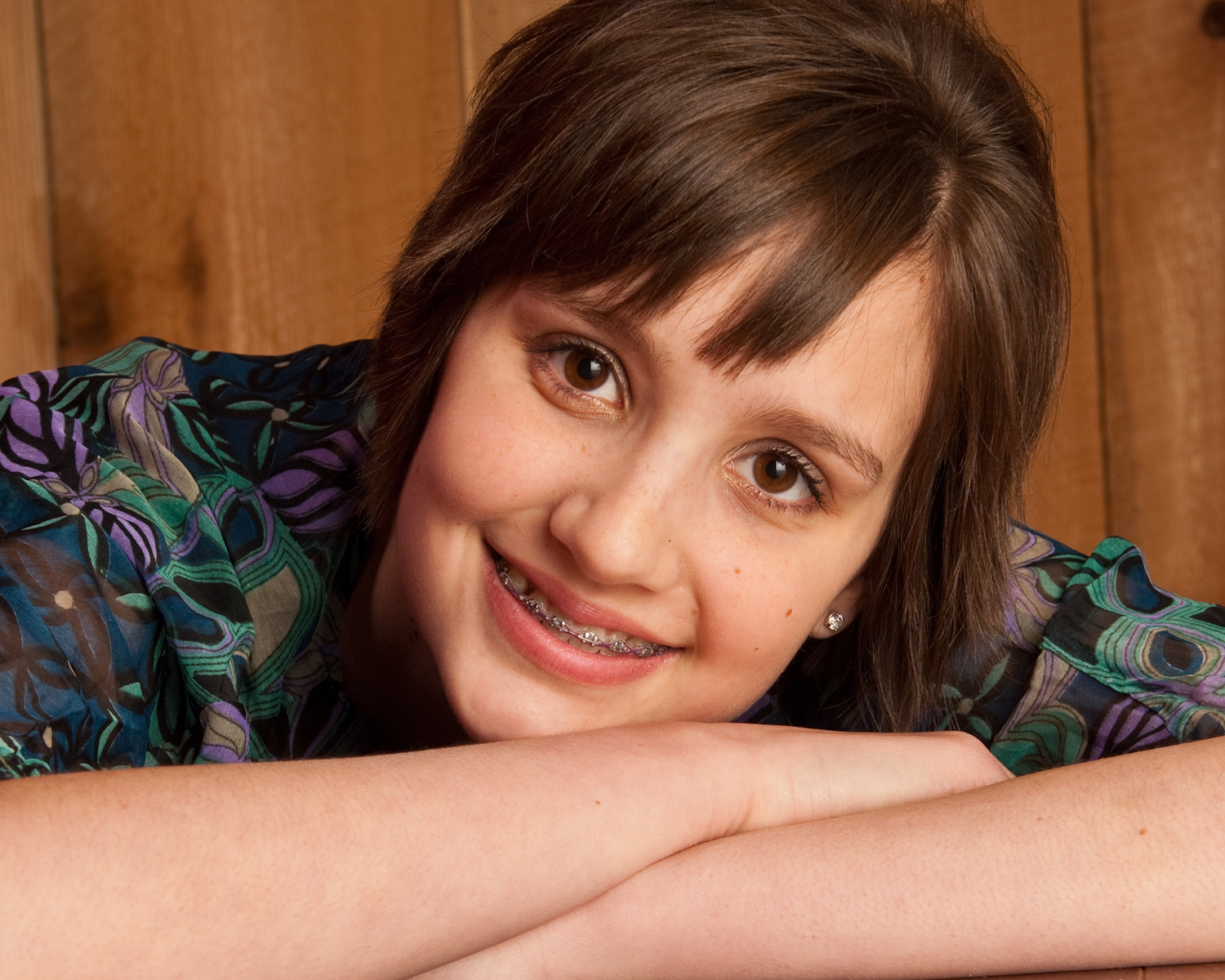
Sarcoma took so much from Hannah, but it never changed who she truly was. She was someone that everyone fell in love with the minute they met her. There was just something about her that could never be explained. She had a fight and drive in her that rubbed off on people. For a lack of better terms, she was bullheaded. That’s what kept her with us for as long as she was. She wanted to show sarcoma who was boss, and I am sure several would agree with me when I say that she sure did. She did not let it define her. She continued living life, gave so much of herself to others, and never let anything slow her down.

Hannah 1

She refused to take no for an answer. In her mind there was always a way. I believe that is the mindset that every cancer patient should have; there is always a way. Whether you have 3 days, 3 months, or 3 years, there is always a way to make the most of your life. Show the cancer that is trying to take over your body that it cannot control your life; it cannot change who you truly are deep inside. It wants you to break down. It wants to ruin your spunk, and your drive to live. Why would you ever want to give cancer what it wants? That was Hannah’s way of looking at it. She wanted to prove to cancer that it would never control her, and she definitely did.

Hannah 2

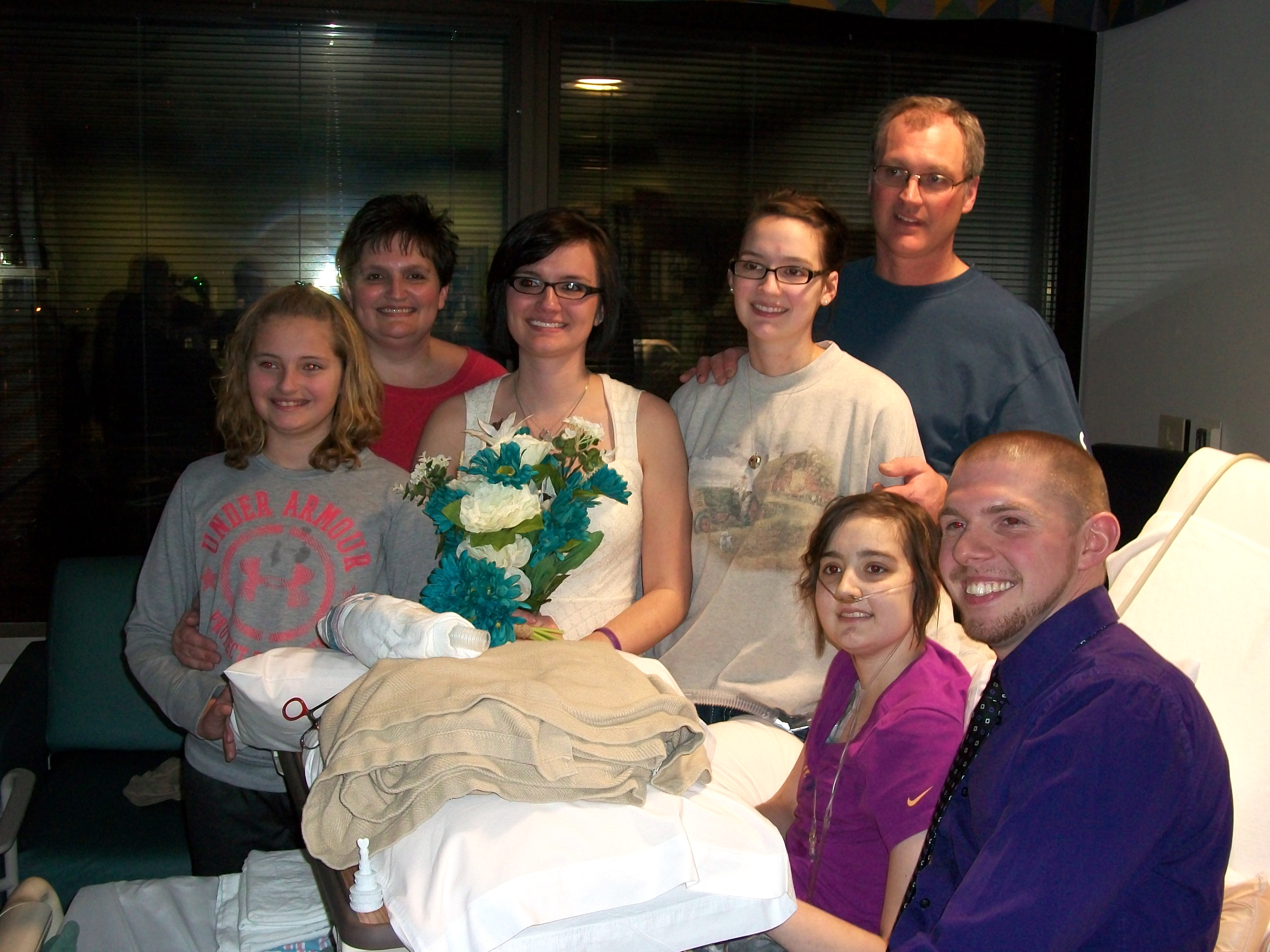
Hannah is the reason that I am who I am today. Every struggle, every scare and battle she fought, shaped me into an amazing individual with a huge dream. I have a tremendous desire to become a sarcoma specialist someday. I have a fight and drive in me that my sister had while fighting a disease that I someday hope to destroy. Without her I do not know where I would be in life. She introduced me to my amazing, loving husband who was there for Hannah through everything. Him and I were able to celebrate our wedding in her hospital room. We will be celebrating our one-year anniversary on February 5th. It is hard to believe that it has almost been a year. It has been a long, tough year, and I wish my sister could be here with us to celebrate. But I know no matter what that she will be celebrating for us in her own way. It was her goal to get us together and to see us be married. I thank God everyday that she was able to be there. She will forever and always be my sister, my friend.

Molly McDowell

Hannah 3

Fragile

It was a slow day in clinic. Time was plentiful. Patients trickled in to be seen. I watched my practice in slow motion. I helped a patient make a better decision about their care. I contemplated on how fragile our health really is; on how symptoms dominate our thoughts and how having good health truly makes a difference to how we live our life. 

Cancer can be very silent in our bodies with vague unnoticed symptoms. It eats at our vitality and makes us weaker though we may not feel it until it is too late. It attacks us physically, emotionally and socially. It is difficult to convince a patient who feels well to accept a therapy that itself would make them feel worse. It’s a very delicate state to explain to a patient their vulnerability and how this disease could end their lives if they do not accept the therapy at hand. I find it frightening at the number of choices there are to navigate and how little time we have to explain rationally to our patients the best options they have.

What happens when the therapy we have to offer really does not have an impact on their lives or wellbeing? Should it be offered? How do you explain with all the progress that is hyped in the media that science for this one patient lags in finding a treatment that helps them get through their ordeal?

Today I felt I had that time, because things happened slowly. It was a refreshing look at care where as things moved slowly it felt like I could see more detail and focus more on my patient. It was like watching the replay of a touchdown.  I have always felt that healing is a process that needs time on its side.

Each patient as an individual needs to be handled with the utmost care, like they were a vase that could easily break. Perhaps that is how it should always be.

 Mo